
Writing on legacy modernization
Engineering deep-dives and strategic analysis on legacy modernization. New post every week.
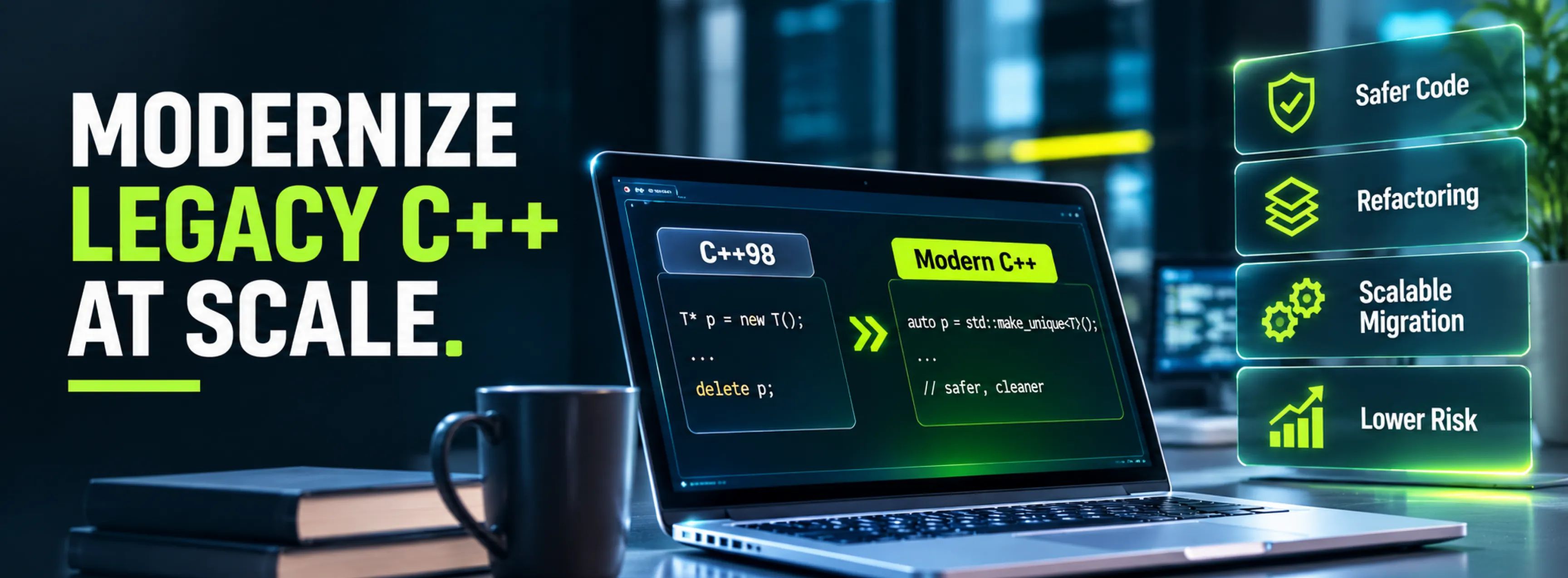
Legacy C++ modernization: moving C++98 codebases to modern C++ safely at scale
Latest post
More articles
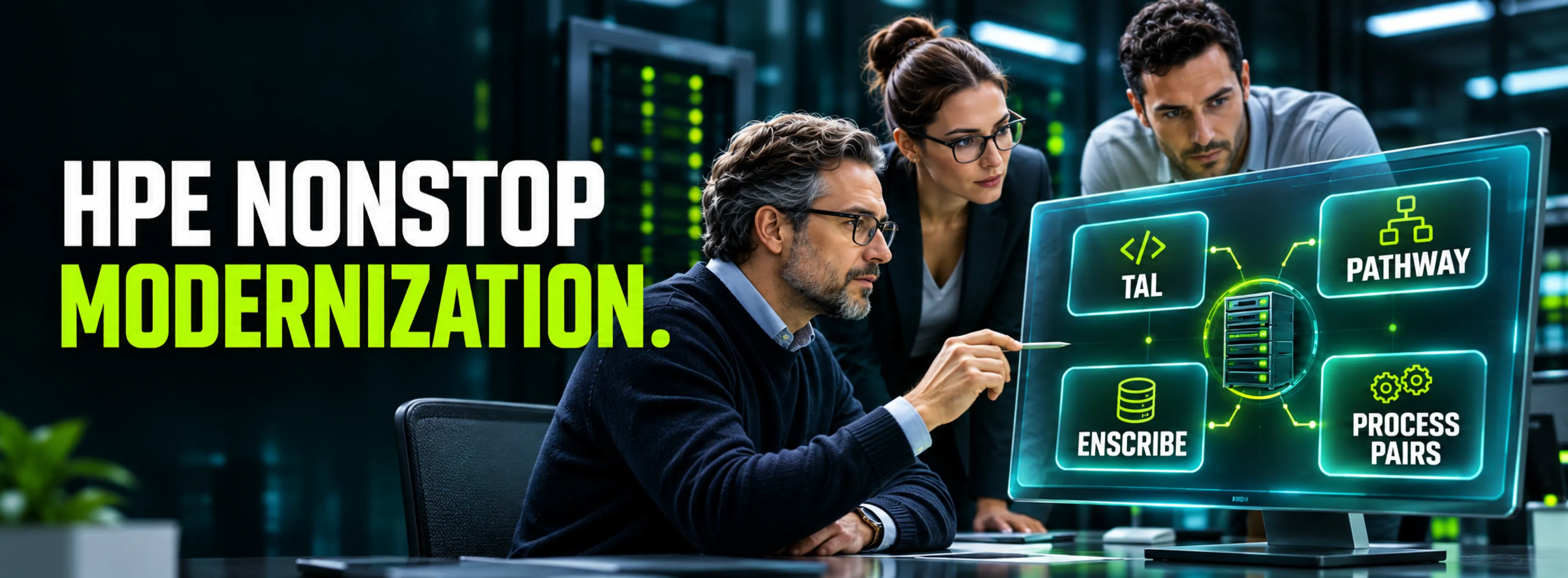
HPE NonStop (Tandem) modernization: TAL, Pathway, Enscribe and process pairs explained
HPE NonStop explained for modernization teams: Guardian, process pairs, Pathway, TMF, Enscribe and TAL, mapped to Java, C# and Kubernetes with real code.
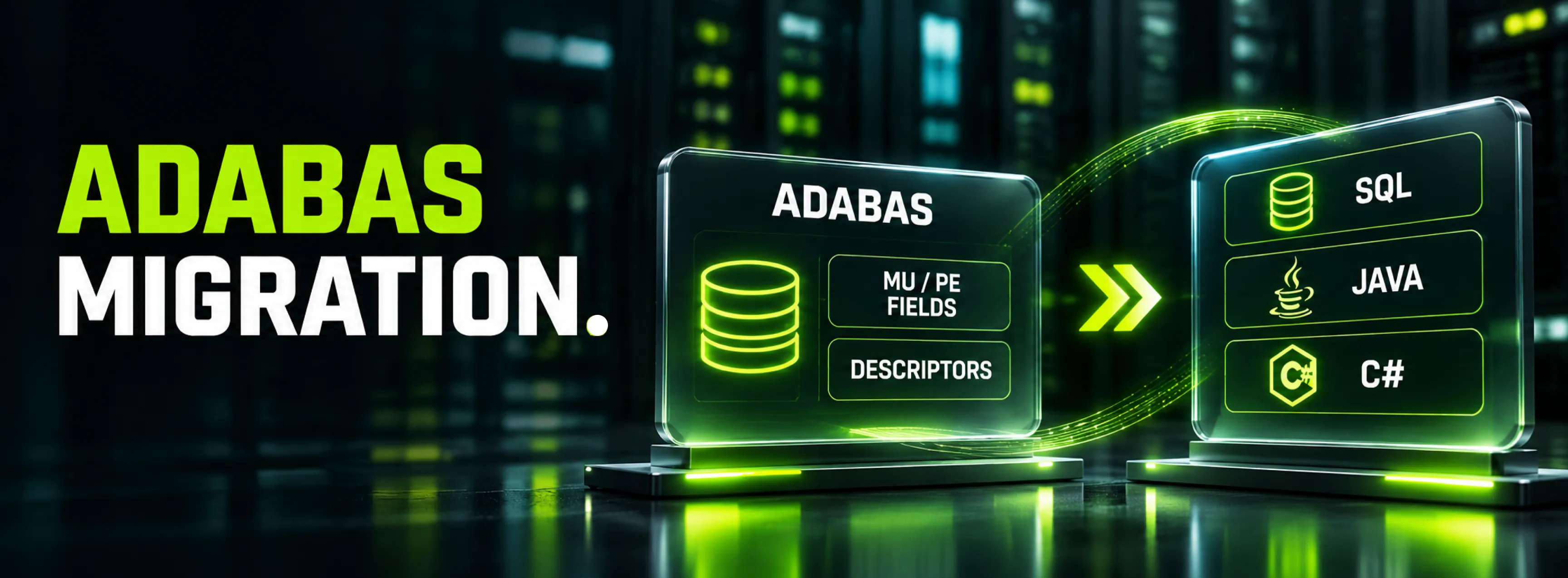
Natural ADABAS migration: from MU/PE fields and descriptors to SQL, Java and C#
Natural ADABAS migration in depth: ISNs, inverted lists, MU/PE groups, descriptors and record holds mapped to SQL, Java and C#, with real before-and-after code.
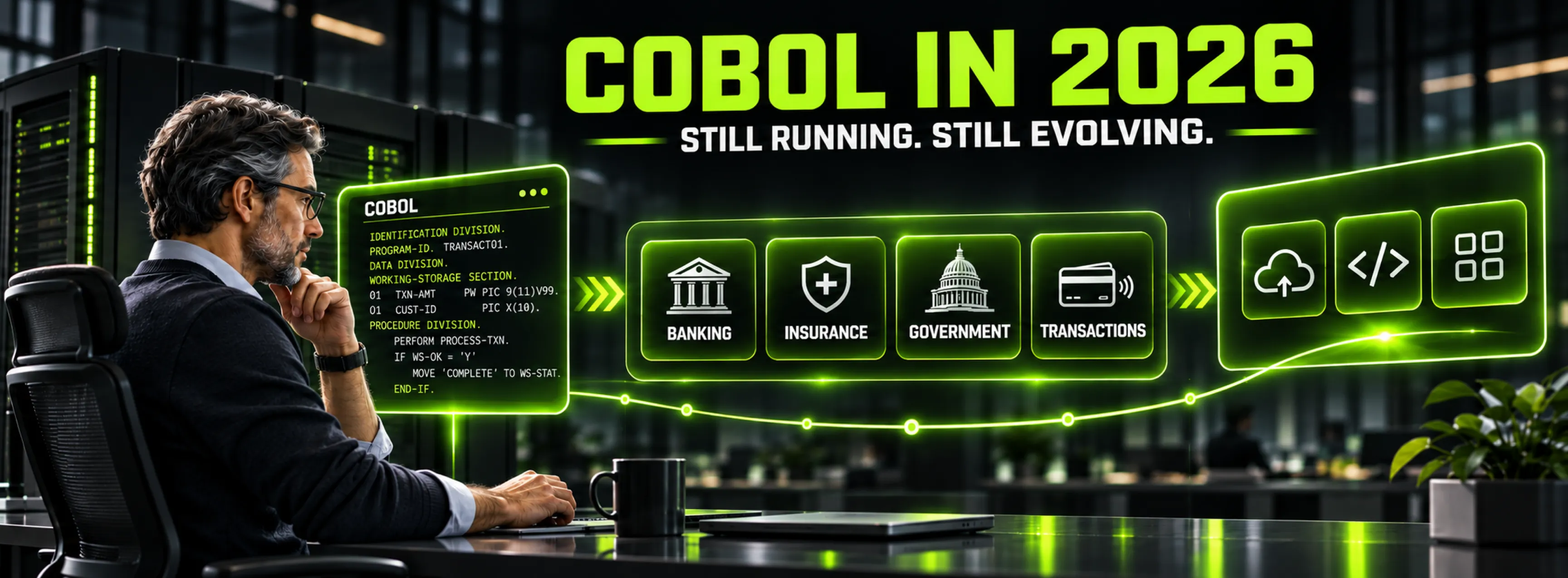
Is COBOL still used in 2026? Where it runs, why it persists and what comes next
Is COBOL still used? Yes. Sourced 2026 data on where COBOL runs, why banks and governments keep it, and the realistic options for what comes next.

COBOL modernization tools: seven categories and when to use each
A guide to COBOL modernization tools by category: analysis, translation, Gen AI assistants, rehosting, API enablement, data migration and testing tools.

Micro Focus COBOL to C#: migration paths for .NET teams
Micro Focus COBOL to C#: four migration paths, the dialect features that complicate translation, decimal handling in C#, data migration, testing and cutover.

How to choose COBOL modernization consultants
How to choose COBOL modernization consultants: the four types of firm, 12 evaluation criteria, RFP structure, pilot design, scoring and contract terms.

EBCDIC to ASCII: why your sort order changes and your reports stop matching
Why EBCDIC and ASCII collating sequences differ, what that does to sorted reports, control breaks, key ranges and SEARCH ALL, and how to handle it during migration.

How to evaluate a Gen AI COBOL conversion tool before you pilot it
A test list for evaluating Gen AI COBOL to Java conversion tools before you commit to a pilot. Seven constructs that separate working translation from plausible output.

What is COBOL modernization? A Plain English guide for CIOs
What is COBOL modernization? A plain-English guide for CIOs covering the approaches, why organizations modernize, what programs involve and key terms.

Everything on the mainframe that is not COBOL, and who owns it after you leave
The COBOL is rarely what stops a mainframe exit. A full inventory of the surround: scheduler, RACF, print, SORT, ISV tools, interfaces and the operational layer.

Reducing MIPS without leaving the mainframe
Practical ways to reduce mainframe MIPS and MSU consumption without migrating off z/OS, including workload placement, compiler currency and code that burns cycles.

EU Cyber Resilience Act reporting has started, and your mainframe is in scope
EU Cyber Resilience Act reporting obligations started 11 September 2026 and apply to products already on the market. What that means for COBOL and mainframe estates.

zos 2.5 leaves standard support on 30 September 2026
z/OS 2.5 leaves standard support on 30 September 2026. What transition to extended support actually changes, the currency chain it triggers, and how to plan.

COBOL to Java migration cost: what actually drives the number
Published COBOL to Java migration costs range from $1 to $25 per line. Here's what actually drives the number, and how to build an estimate you can defend.

How long does a COBOL to Java migration take?
Typical COBOL to Java migrations run 3 to 12 months for isolated applications and 2 to 5 years for core systems. Here's what sets the timeline, phase by phase.

Is automated COBOL to Java conversion reliable?
Automated COBOL to Java conversion is reliable, conditionally. Here's what the published benchmarks show, where accuracy breaks down, and how to verify output.

Rehost, refactor or rearchitect: choosing a mainframe modernization strategy
Rehost, refactor or rearchitect? Here's what each mainframe modernization strategy costs you in year 3, and how to tell which one fits your estate.

Why mainframe modernization projects fail
Most failed mainframe modernization projects share the same 6 decisions. Here's what goes wrong, when it becomes visible, and how to structure around it.

You Modernized and the Cloud Bill Went Up. Here's Why.
Cloud bills often rise after modernization. Here is why lift-and-shift inverts the economics, and how FinOps, unit economics and correct sequencing fix it.

Conway's Law Already Chose Your Target Architecture
Conway's Law decides your modernization outcome. How to spot a distributed monolith, restructure teams first, and keep legacy knowledge from walking out.

93% Accurate Is a Failing Grade for COBOL Translation
Vendors claim 93% COBOL-to-Java accuracy. On 5 million lines, that is 350,000 wrong ones. Where AI genuinely helps, and how to prove code equivalence.

Modernize Now: Why Legacy Costs Are Breaking the Bank Budget
Mainframe, NonStop, COBOL, and core and payments package costs rise every year for banks. Here's the full cost picture and how to move off them safely.

Four Ways to Modernize Legacy Code: Replatform, In Place, Rewrite, Replace
A practical guide to the four real options for an aging system, what each one costs in time and risk, when to pick it, and where Gen AI and deterministic transformation each belong.

The talent shortage for legacy code: why it is getting worse, what it costs, and how to get ahead of it
The people who understand COBOL, PL/I, Assembler, and other legacy languages are retiring faster than they can be replaced. This is what that costs, why hiring won't fix it on its own, and the response that actually shrinks the problem.

How to Fund Modernization When There is No New Features at the End
Modernization business cases die in the CFO's office, not the CIO's, because they are written in engineering currency and submitted to a process that only clears three kinds of argument.

Most of Your Legacy Estate Should Be Left Alone
A modernization firm's framework for deciding what not to modernize: change-rate triage, nine dispositions, a weighted scoring model and a worked example.

Why Most Strangler Fig Migrations Stall at 40%
Strangler fig migrations routinely plateau at 30-50% and never finish. Here is why the stall happens and how to design an exit condition before sprint one.

Security Debt Is the Modernization Deadline You Don't Control
Legacy systems are structurally unpatchable, not just unpatched. How to use security and regulatory deadlines to turn modernization into a dated commitment.

AI in software modernization: how Gen AI and symbolic AI actually rebuild legacy systems
How Gen AI and symbolic AI modernize legacy code, where each breaks, and why deterministic transformation plus Gen AI is the correct path at scale.

Why GenAI Alone Is Not Enough for Modernization
Understanding a legacy system and transforming a legacy system are not the same problem \u2014 the future of modernization is both working together.

How Deterministic Software Transformation Works
Symbolic AI, Program Analysis, and Large-Scale Legacy Modernization


 info@semanticdesigns.com
